If the Strait of Hormuz Remains Closed: Impact on LED Candles
A prolonged 2026 Strait of Hormuz closure raises plastic and electronic component costs, causes supply delays for wholesale LED candles. This guide shares actionable strategies for suppliers, manufacturers and retailers to stay profitable.
If the Strait of Hormuz Remains Closed: Impact on LED Candles (2026 Wholesale Guide)
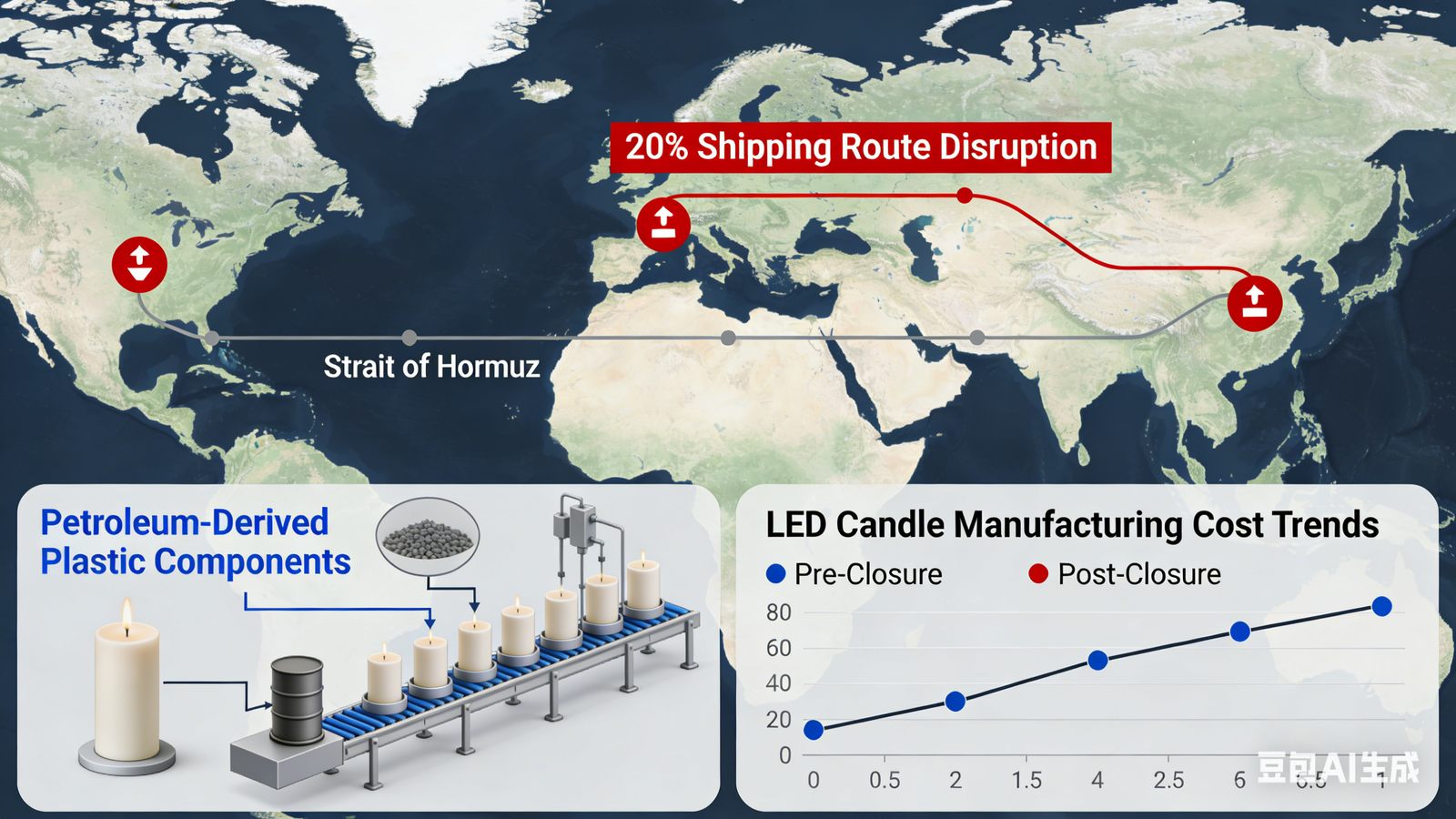
For wholesale LED candle suppliers, manufacturers, and retail buyers, the ongoing Strait of Hormuz closure is no longer a short-term disruption—it’s a long-term risk that threatens supply chains, inflates costs, and reshapes market demand. As the world’s critical energy shipping route, the Strait of Hormuz controls nearly 20% of global oil flows, and its prolonged closure directly impacts the production, pricing, and availability of LED candles—even though they are flameless. Unlike traditional paraffin candles, LED candles rely on petroleum-derived plastics, electronic components, and energy for manufacturing, all of which are vulnerable to the energy and supply chain chaos caused by the blockade. This 2026 guide breaks down the specific impacts of a continued Strait of Hormuz closure on LED candle businesses and actionable strategies to stay profitable and competitive.
Why a Continued Strait of Hormuz Closure Impacts LED Candles
Many wholesale buyers wonder: why does a Middle Eastern shipping lane closure affect LED candles, which don’t use paraffin wax? The answer lies in the LED candle supply chain’s deep reliance on oil and petroleum-based products—components that are directly impacted by the blockade’s ripple effects:
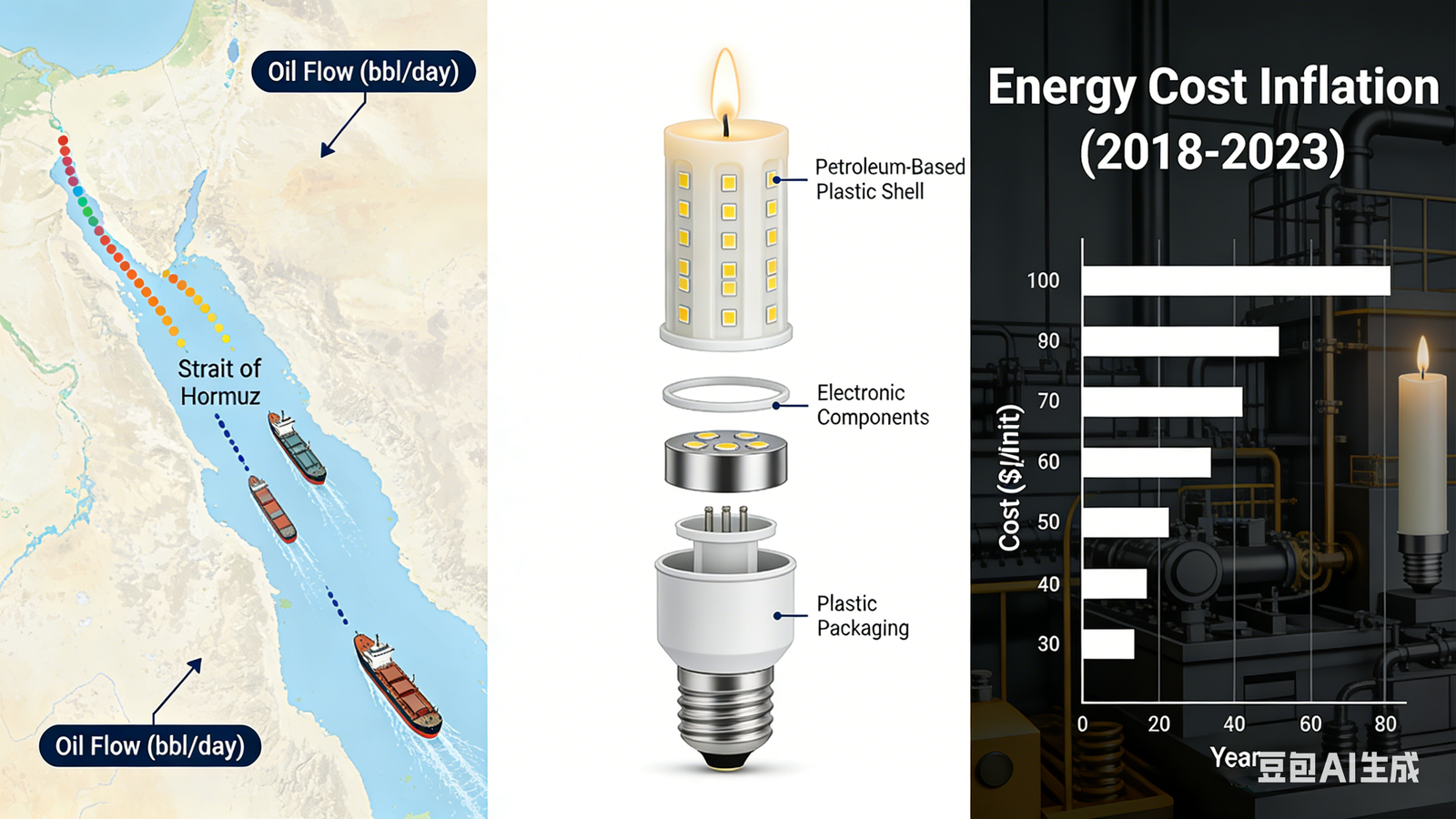
LED candles are made from three core oil-reliant components: petroleum-based plastics (ABS, PP, PC for candle shells), electronic parts (LED chips, circuit boards, batteries, which rely on oil-derived materials and energy-intensive manufacturing), and packaging materials (plastic wraps, boxes, which are also petroleum-based). Additionally, manufacturing LED candles requires significant energy—much of which comes from oil or natural gas, whose prices have soared due to the blockade. With experts warning the closure could last months (per Goldman Sachs analysis), these impacts will only intensify, creating challenges for every link in the LED candle wholesale chain.
Key Impacts of a Prolonged Strait of Hormuz Closure on LED Candles (2026)
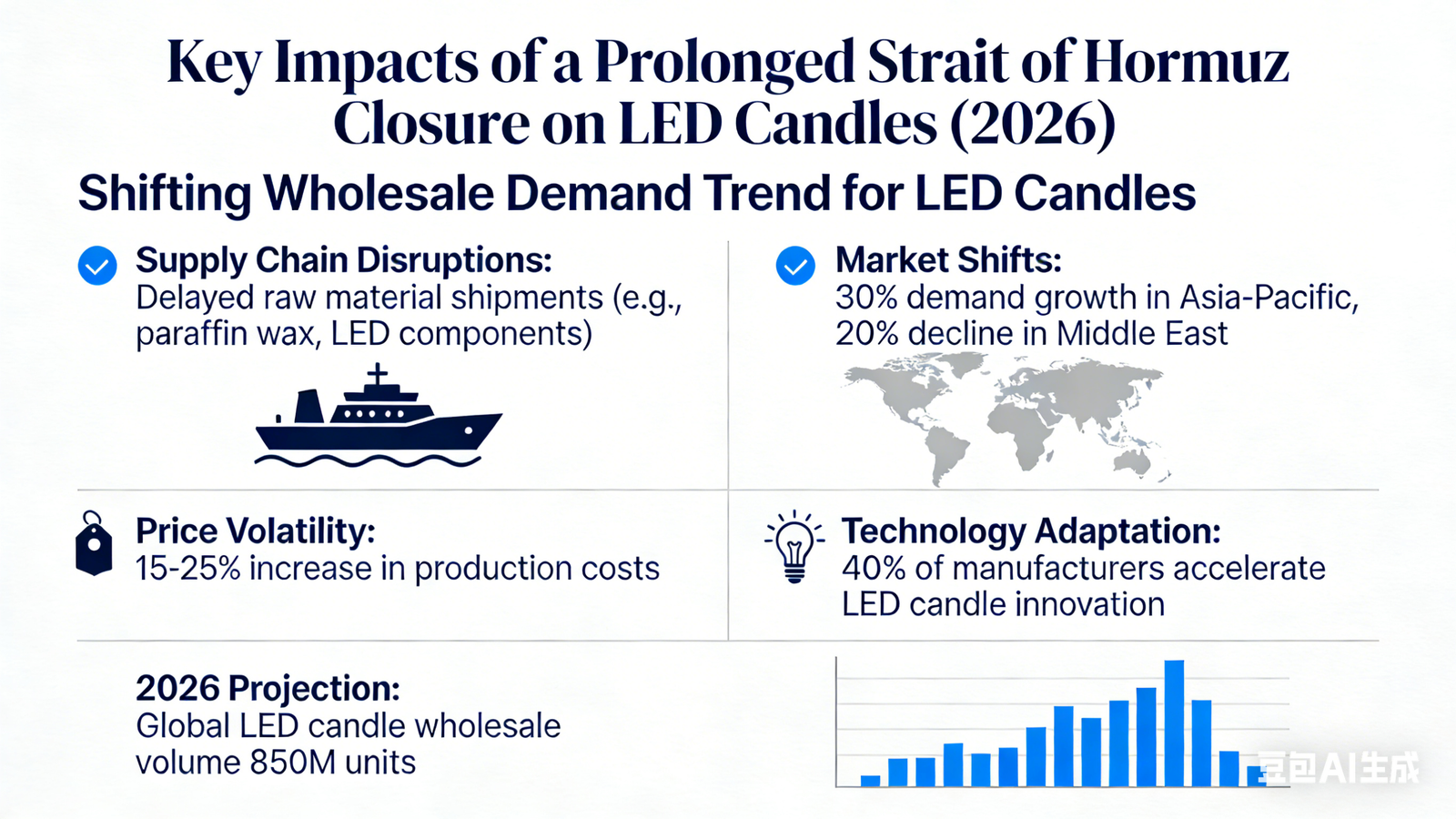
A continued closure will amplify the current supply chain chaos, with four critical impacts that wholesale LED candle businesses must prepare for:
1. Skyrocketing Plastic Costs (the Biggest Threat to LED Candle Production)
Plastic is the backbone of LED candle manufacturing—accounting for 60-75% of an LED candle’s production cost—and its price is directly tied to crude oil. As the Strait of Hormuz closure persists, crude oil prices are projected to surge to 180-210 USD/barrel in a worst-case scenario, according to Citi Research. This has already triggered a sharp rise in plastic prices:聚丙烯 (PP) prices have increased by over 30% since March 2026, while ABS and PC plastics (commonly used for LED candle shells) have risen 15-40%.
The cost is rapid: crude oil price hikes flow through to naphtha (a key炼化原料), then to ethylene and propylene (the "mother of plastics"), and finally to the finished plastics used in LED candles—with this chain now taking just 10 days instead of the usual two weeks due to market panic. For LED candle manufacturers, this means a 12-18% increase in production costs, which will either cut profit margins or force wholesale price hikes.
2. Electronic Component Shortages & Delays
LED candles rely on critical electronic components—LED chips, circuit boards, and batteries—whose production is energy-intensive and dependent on global supply chains disrupted by the blockade. The closure has already caused helium shortages (a key material for chip cooling), threatening 50% of global chip产能, including those used in LED lights. Additionally, shipping delays and skyrocketing freight costs (up 250% due to detours around the Cape of Good Hope) have slowed the delivery of electronic components from Asia to global markets.
If the closure continues, these shortages will worsen: LED chip lead times could extend from 4-6 weeks to 8-12 weeks, and battery prices (which rely on oil-derived materials) could rise by another 15-20%. For wholesale suppliers, this means stockouts of popular LED candle styles—especially remote-controlled and color-changing models—and delayed orders for retail clients like hotels and event planners.
3. Soaring Manufacturing & Shipping Costs
LED candle manufacturing is energy-intensive, and the blockade has driven up energy costs worldwide. As oil and natural gas prices surge, manufacturing facilities face higher electricity and fuel costs—adding another 8-12% to production expenses. Compounding this, shipping costs have exploded: detouring around the Strait of Hormuz adds 4,000 kilometers to voyages, extending shipping times by 12-18 days and increasing freight costs by 50-100%. War risk insurance premiums have also spiked from 0.25% to 3%, further inflating the cost of importing finished LED candles or exporting them to wholesale clients overseas.
For small to mid-sized wholesale businesses, these costs are particularly burdensome—many are stuck between absorbing losses or raising wholesale prices, which risks losing clients to competitors with more stable supply chains.
4. Shifting Wholesale Demand & Customer Preferences
A prolonged closure will reshape wholesale demand for LED candles in two key ways:
First, commercial clients (hotels, event planners, restaurants)—who are also grappling with higher energy and supply costs—may cut back on bulk orders for premium LED candles (e.g., large pillar models, custom-branded options) and shift to more affordable, basic styles. Second, retail buyers will prioritize LED candles with longer lifespans and lower maintenance costs (e.g., rechargeable models) to offset higher wholesale prices. Additionally, eco-friendly LED candles (made with recycled plastics or alternative materials) may gain traction, as businesses and consumers seek to mitigate supply chain risks and align with sustainability trends.
Wholesale LED Candle Strategies to Survive a Prolonged Closure (2026)
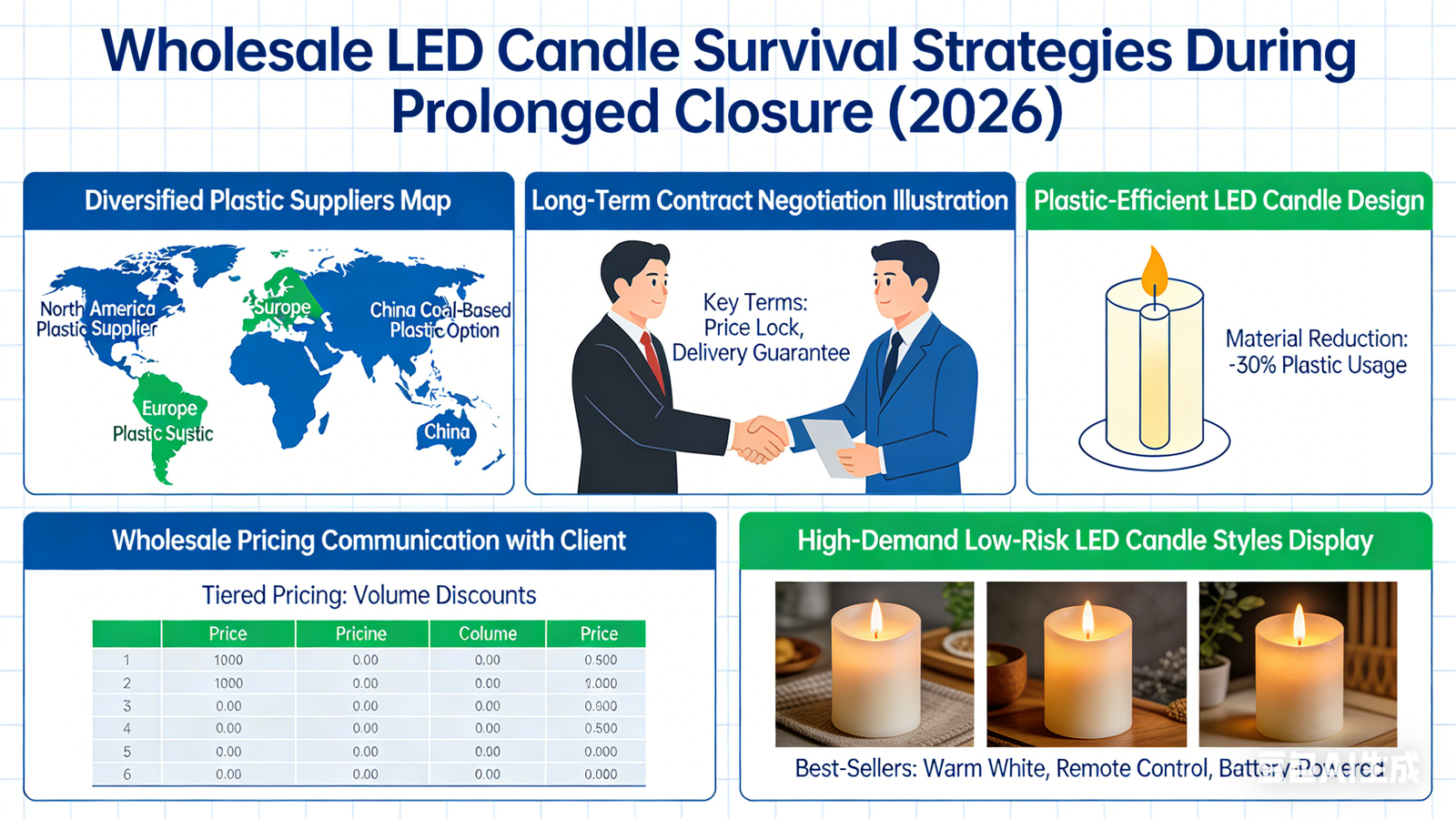
A continued Strait of Hormuz closure requires proactive adaptation—waiting for the crisis to pass is not an option. Here are actionable strategies for wholesale LED candle suppliers, manufacturers, and retail buyers to mitigate risks and maintain profitability:
1. Diversify Plastic Suppliers & Explore Alternative Materials
Reduce reliance on oil-based plastics from Middle Eastern or oil-dependent suppliers by sourcing from regions with stable plastic production (e.g., North America, Europe, China’s coal-based plastic manufacturers). Coal-based polypropylene (PP) producers are currently profitable amid high oil prices, making them a cost-effective alternative to oil-based plastics. Additionally, test LED candle shells made from recycled plastics or bio-based plastics (e.g., PLA) to reduce oil dependence—these materials not only lower costs but also appeal to eco-conscious clients.
2. Lock in Long-Term Contracts for Key Components
To avoid price volatility and shortages, negotiate long-term contracts with LED chip, battery, and plastic suppliers at fixed or capped prices. This is especially critical for high-demand components like LED chips, which are facing shortages. Additionally, stock up on essential components in bulk—focus on best-selling items like remote-controlled LED pillar candles and waterproof models—to avoid stockouts during extended supply chain delays. Ensure proper storage to prevent component damage (e.g., keep batteries in cool, dry conditions).
3. Optimize Production to Cut Costs
Reduce manufacturing costs by optimizing production processes: use plastic-efficient designs (e.g., thinner but durable shells) to minimize plastic usage, and consolidate orders to reduce energy and labor costs. Additionally, shift production to off-peak hours to take advantage of lower electricity rates, and invest in energy-efficient manufacturing equipment to cut energy expenses. For wholesale suppliers, streamline inventory to focus on high-margin LED candle styles (e.g., rechargeable, waterproof models) and phase out low-margin, plastic-heavy products.
4. Adjust Wholesale Pricing & Communicate Value
While price hikes are inevitable, communicate transparently with wholesale clients to maintain trust. Explain the rationale behind price adjustments (e.g., "Price increase reflects rising plastic and shipping costs due to the Strait of Hormuz closure") and offer volume discounts to encourage bulk orders. Highlight the value of your LED candles—emphasize their safety, long lifespan, and energy efficiency—to justify higher prices. For example, position rechargeable LED candles as a cost-saving option for commercial clients, as they reduce long-term battery replacement costs.
5. Prioritize High-Demand, Low-Risk LED Candle Styles
Shift your inventory focus to LED candle styles that are less vulnerable to supply chain disruptions and in high demand:
- Basic LED tea lights and votives: These use less plastic and have simpler electronic components, reducing exposure to shortages and cost hikes.
- Waterproof LED candles: These are in high demand for outdoor use (spring/summer) and offer strong profit margins.
- Rechargeable LED candles: These reduce reliance on disposable batteries (which are facing price hikes) and appeal to cost-conscious clients.
Avoid overstocking niche styles (e.g., custom-shaped, color-changing models with complex components) that are more vulnerable to shortages.
2026 Outlook: What to Expect If the Closure Persists
If the Strait of Hormuz remains closed through 2026, the LED candle industry will face a permanent shift:
- Plastic prices will stabilize at higher levels, forcing manufacturers to adopt alternative materials long-term.
- Wholesale LED candle prices will rise by 15-25% overall, with premium models seeing the biggest hikes.
- Eco-friendly and rechargeable LED candles will become mainstream, as businesses and consumers seek to mitigate supply chain risks and reduce costs.
- Supply chains will become more regionalized, with wholesale businesses prioritizing local or nearshore suppliers to avoid shipping delays and costs.
For wholesale LED candle businesses, adaptability will be the key to survival. Those who diversify suppliers, optimize production, and prioritize high-demand styles will not only weather the crisis but also gain a competitive edge in the post-closure market.
Final Thoughts for Wholesale LED Candle Businesses
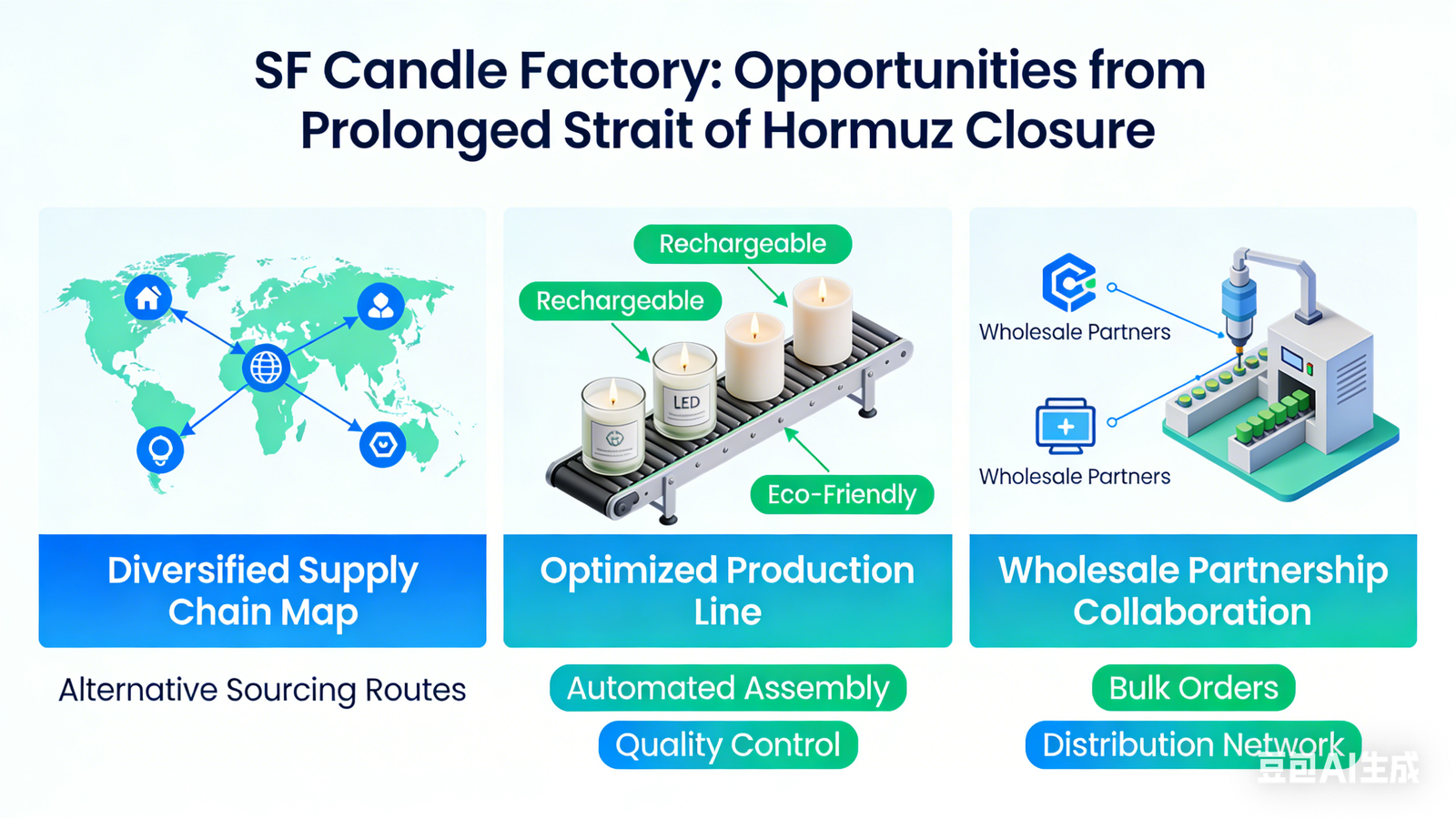
A prolonged Strait of Hormuz closure is a challenging scenario for the LED candle industry, but it also presents opportunities for businesses that adapt proactively. By diversifying supply chains, optimizing production, and prioritizing high-demand, low-risk products, wholesale LED candle suppliers can mitigate the impact of rising costs and shortages, maintain customer trust, and stay profitable.
At SF Candle Factory, we’ve already diversified our plastic and electronic component suppliers, optimized our production processes, and expanded our range of rechargeable and eco-friendly LED candles to help our wholesale partners navigate this crisis. To explore our high-quality, reliable wholesale LED candles—designed to withstand supply chain volatility—visit our home page today.